Men apply it. If another body checks them, then that body is the higher authority, and if another body checks that body, the same question repeats. Government is not “turtles all the way down.” Eventually, every system terminates somewhere. You have not avoided final earthly authority or the problem of evil men. You have merely relocated it from the king to the domestic authority that can remove the king, and in doing so increased the number of sinful men who hold final earthly authority.
"Quis custodiet ipsos custodes?"
Who watches the watchmen?
If the law is enforced against the king by men above the king, then who enforces the law against those men when they become corrupt? If your answer is “the law,” then you have not answered the question, because law does not enforce itself. Men enforce it. And if another domestic body enforces the law against them, then that body is above them, and the same question applies again. Eventually, every system terminates somewhere.
No, it is not. If anything, the whole history of government proves that no structure devised by men eliminates tyranny. Kings, courts, legislatures, councils, mobs, military factions, and bureaucracies can all become tyrants.
Rome is an obvious example. The Roman Republic had divided offices, annual magistrates, consuls, praetors, quaestors, censors, tribunes, assemblies, a senate, vetoes, and even a temporary dictatorship for emergencies. It was full of the sort of procedural checks people imagine will prevent tyranny.
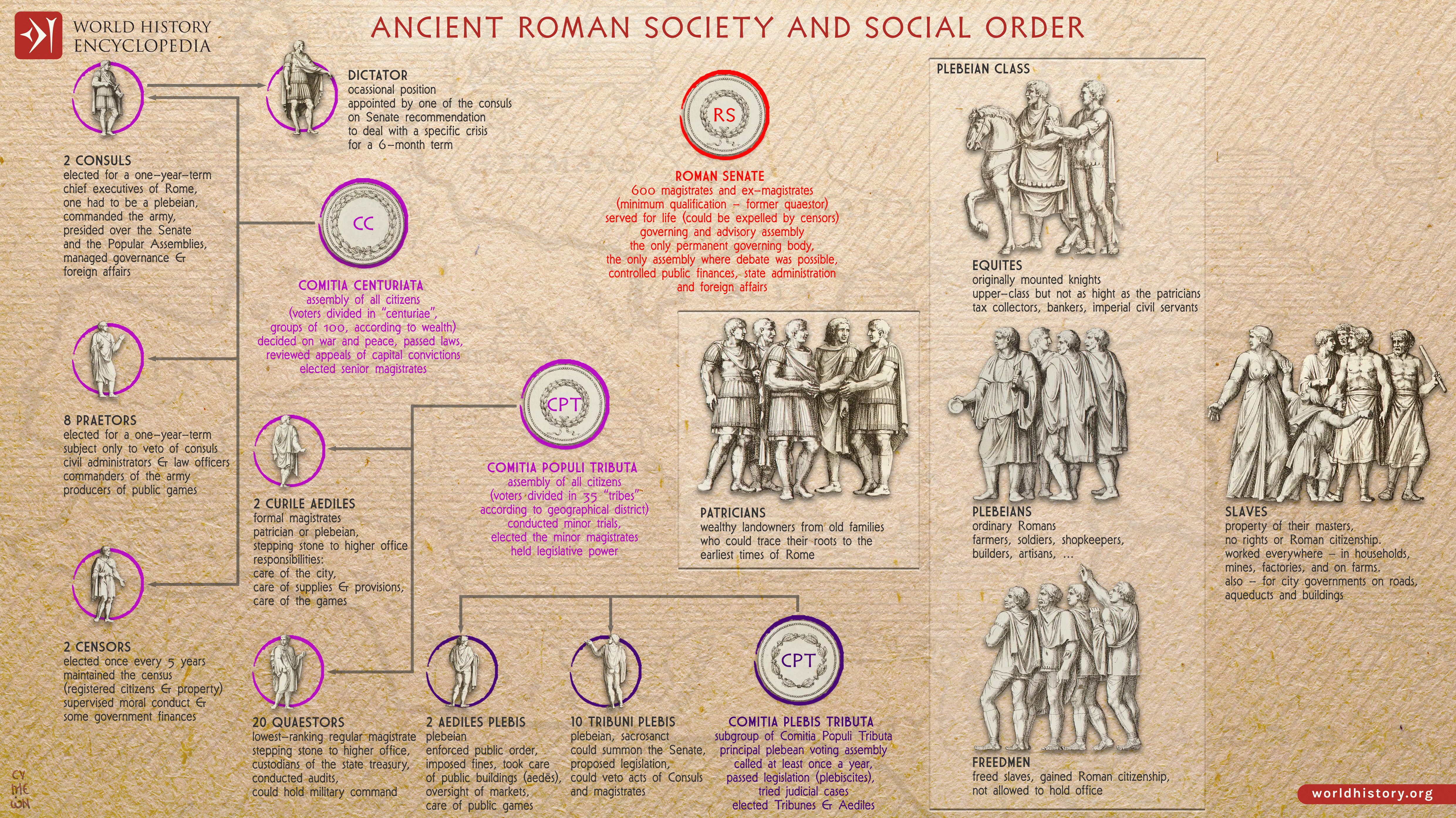
And yet Rome still collapsed into civil war, dictatorship, and imperial rule. Why? Because procedures do not abolish the will to power. Sinful men will use whatever structure gives them leverage. So when you say your proposed system is “the only way” to avoid creating a tyrant, you are making a claim history does not support. At most, your system changes where the danger concentrates. Every government terminates somewhere, and every terminal authority can be abused. The question is not whether a constitution can guarantee that tyranny never arises. It cannot. The question is where final earthly authority should terminate, and whether Scripture authorizes the terminal authority you are proposing.
That may explain your confidence, but it does not establish your argument. A man can become more firmly convinced because the case for his position has grown stronger, but he can also become more firmly convinced because he has stopped reconsidering the premise. “This has only further cemented me” is not an argument; it is a statement about your own settled state of mind. That is why humility matters in these discussions. Christ said we must become as little children, not childish or gullible, but humble enough to receive correction, reconsider, and not treat our settled assumptions as beyond challenge. Whether you have held this position for a long time does not answer the question on the table.
Again, that does not follow. A king without a superior domestic removal court is not thereby a king whose every whim becomes law. His authority is limited by God’s law, by jurisdiction, and by the duties of the offices beneath him. If he commands sin, subjects must not obey. If he demands unlawful action from officers, they must refuse. If he trespasses into another jurisdiction, those within that jurisdiction must resist. What you keep calling “slave to the monarch’s whims” is really just your repeated assertion that law has no meaning unless some domestic authority can remove the king.
But that is the very point under dispute. The people are not slaves to the king’s whims simply because lesser domestic authorities lack jurisdiction to depose him. Refusal, rebuke, resistance within jurisdiction, non-cooperation, and obedience to God over man are not slavery. They are lawful responses to wicked rule. Your proposed solution does not prevent slavery to political whims. It merely changes whose whims become decisive when the highest office is contested.
I reject your premise that “substantive check” can only mean a king-removal system. There are substantive checks: God’s law, jurisdictional boundaries, lesser officers refusing unlawful commands, subjects refusing wicked orders, treasurers refusing unlawful disbursements, priests resisting trespass into priestly jurisdiction, public record, rebuke, non-cooperation, civil disobedience, and the king’s eventual death.
What is missing is not “any substantive check.” What is missing is the specific check you want: a domestic authority above the king with power to remove him. But that is the very thing under dispute. You are smuggling your conclusion into the phrase “substantive check.” A lawful restraint can be real without being a removal mechanism.
The same applies to any man, or group of men, within your proposed system. The moment a sufficiently bold judge, council, prosecutor, military faction, or procedural body realizes it can weaponize the law against the king (iow, ignore the law) with impunity, your system begins its descent into tyranny too. Whether that happens in a single removal proceeding or over several generations is beside the point. The outcome is essentially the same.
You have not solved the problem of the will to power. You have only moved it. A king can ignore the law under color of royal authority, and a removal body can abuse the law under color of legal authority. Both are dangers because both are made up of sinners. The difference is that your system places multiple sinners in the seat of final earthly authority, whereas mine places one: a visible, personally responsible man who can be resisted, rebuked, shown to be wrong, and called to repentance. A group of sinful men, by contrast, can diffuse responsibility, hide behind procedure, and call its ambition “the rule of law.”
No. That's a straw man. This is not a case of “the perfect becoming the enemy of the good.” It is a matter of jurisdiction. God’s active restraint of Israel’s kings was not merely a useful feature in a governmental design. It was God acting as covenant Lord over the nation He uniquely established. Men cannot simply manufacture an institutional substitute for that role and call it “good enough.”
If God removes a king, God has jurisdiction. If God sends a prophet, commissions a man, or uses a foreign nation as an instrument of judgment, God has acted. But if ordinary domestic officers claim standing authority to remove the chief civil ruler, then they are not merely “compensating” for God’s absence. They are assuming jurisdiction God did not give them. That is the issue: not whether God’s direct action can be perfectly replicated, but whether men have authority to occupy that place at all.
Again, you are smuggling your conclusion into the language.
First, ordinary nations do not lack God’s oversight. They lack Israel’s unique covenant arrangement, where God directly intervened in that nation’s royal line by prophets, covenant curses, direct judgments, and specially commissioned instruments. That is not the same thing as God being absent from ordinary nations.
Second, you have not established that your proposed restraint is lawful. Calling it “lawful” because you would write it into the system does not answer whether that mechanism is authorized in principle. A constitution can authorize something structurally wrong.
Third, the system does not leave the king with “no meaningful check” unless “meaningful check” means “a domestic authority empowered to remove him.” But that is exactly the point in dispute. God’s law, jurisdictional limits, refusal of unlawful commands, rebuke, non-cooperation, public record, civil disobedience, and the king’s mortality are all meaningful checks. What they are not is the particular check you want.
So the issue is not whether a rogue king should be “unchecked.” The issue is whether your proposed remedy creates a superior domestic authority over the king in the decisive case. And you have now admitted that it does.



