You are using an out of date browser. It may not display this or other websites correctly.
You should upgrade or use an alternative browser.
You should upgrade or use an alternative browser.
Mid-Acts Presentations
- Thread starter Right Divider
- Start date
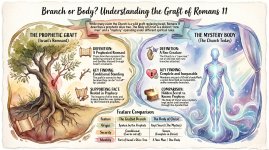
Right Divider
Body part
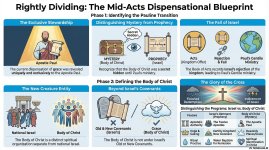
Right Divider
Body part
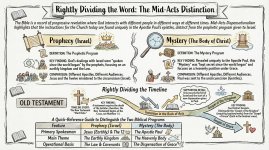
Right Divider
Body part

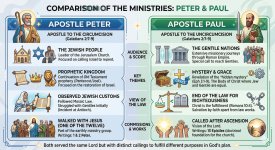
Right Divider
Body part
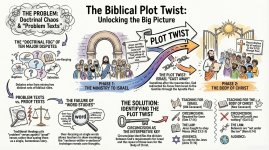
Based on The Plot (2013 edition):
Right Divider
Body part
Right Divider
Body part
Right Divider
Body part
Right Divider
Body part
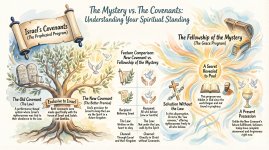

You should make one that explicitly parallels the ministry of the Tree of the Knowledge of Good and Evil with the ministry of Law, including the Ten Commandments, and that contrasts that ministry of death with ministry of the Spirit. II Corinthians 3
Right Divider
Body part
That's a good idea.You should make one that explicitly parallels the ministry of the Tree of the Knowledge of Good and Evil with the ministry of Law, including the Ten Commandments, and that contrasts that ministry of death with ministry of the Spirit. II Corinthians 3
Note that I generate these based on content that I find on the Internet. The content itself is not my own. Perhaps I can use The Plot to get that content.
Right Divider
Body part
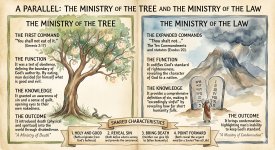
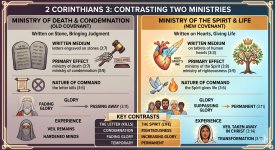
You should make one that explicitly parallels the ministry of the Tree of the Knowledge of Good and Evil with the ministry of Law, including the Ten Commandments, and that contrasts that ministry of death with ministry of the Spirit. II Corinthians 3
Right Divider
Body part
Last edited:
Both are really good, but I was thinking of specifically highlighting their shared ministry of death...
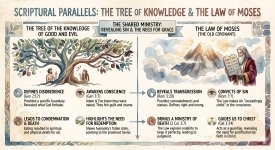
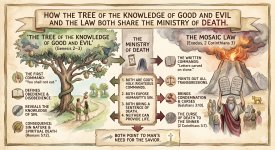
There is a direct functional parallel in Scripture between the Tree of the Knowledge of Good and Evil and the Law of Moses. They share the same ministry...
A command is given. Death is attached to the command.
That principle does not disappear after Eden. It expands.
Now listen to how Paul describes the Law:
The pattern is identical.
A command is given.
Sin takes occasion.
Death results.
That is exactly what happened at the Tree, and it is exactly how Paul describes the Law.
The Tree introduced the knowledge of good and evil in the context of a command that brings death when violated. The Law is the full codified expression of that same reality. What was once a single command in Eden becomes an entire system of commandments at Sinai.
In that sense, and very deliberately speaking in terms of function, the Law is the outworking of what was introduced at the Tree. It operates on the same principle, produces the same result, and carries the same ministry. The law is, in effect, the fruit of that Tree.
For those under grace, this matters.
If the Law is a “ministration of death,” and if sin uses the commandment to bring death, then returning to the Law as a means of righteousness is not a neutral act. It is, in effect, placing oneself back under the same death-principle first encountered in Eden. In Christ, the curse that came in Eden is lifted, partaking of the law is, in effect, partaking of the Tree just as Adam did.
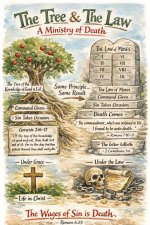
There is a direct functional parallel in Scripture between the Tree of the Knowledge of Good and Evil and the Law of Moses. They share the same ministry...
Genesis 2:16–17
“And the LORD God commanded the man, saying, Of every tree of the garden thou mayest freely eat:
But of the tree of the knowledge of good and evil, thou shalt not eat of it: for in the day that thou eatest thereof thou shalt surely die.”
A command is given. Death is attached to the command.
That principle does not disappear after Eden. It expands.
Romans 5:12
“Wherefore, as by one man sin entered into the world, and death by sin; and so death passed upon all men, for that all have sinned:”
Now listen to how Paul describes the Law:
Romans 7:9–11
“For I was alive without the law once: but when the commandment came, sin revived, and I died.
And the commandment, which was ordained to life, I found to be unto death.
For sin, taking occasion by the commandment, deceived me, and by it slew me.”
II Corinthians 3:6–7
“…for the letter killeth, but the spirit giveth life.
But if the ministration of death, written and engraven in stones, was glorious…”
II Corinthians 3:9
“For if the ministration of condemnation be glory, much more doth the ministration of righteousness exceed in glory.”
The pattern is identical.
A command is given.
Sin takes occasion.
Death results.
That is exactly what happened at the Tree, and it is exactly how Paul describes the Law.
The Tree introduced the knowledge of good and evil in the context of a command that brings death when violated. The Law is the full codified expression of that same reality. What was once a single command in Eden becomes an entire system of commandments at Sinai.
In that sense, and very deliberately speaking in terms of function, the Law is the outworking of what was introduced at the Tree. It operates on the same principle, produces the same result, and carries the same ministry. The law is, in effect, the fruit of that Tree.
For those under grace, this matters.
If the Law is a “ministration of death,” and if sin uses the commandment to bring death, then returning to the Law as a means of righteousness is not a neutral act. It is, in effect, placing oneself back under the same death-principle first encountered in Eden. In Christ, the curse that came in Eden is lifted, partaking of the law is, in effect, partaking of the Tree just as Adam did.
Right Divider
Body part
The first one does show the things in common, including "Bring death" (bottom center).Both are really good, but I was thinking of specifically highlighting their shared ministry of death...
I'm pretty much using your exact words and confining the generation to content of The Plot.There is a direct functional parallel in Scripture between the Tree of the Knowledge of Good and Evil and the Law of Moses. They share the same ministry...
Genesis 2:16–17“And the LORD God commanded the man, saying, Of every tree of the garden thou mayest freely eat:But of the tree of the knowledge of good and evil, thou shalt not eat of it: for in the day that thou eatest thereof thou shalt surely die.”
For this one, I used this prompt:
Show the direct functional parallel in Scripture between the Tree of the
Knowledge of Good and Evil and the Law of Moses. They share the same
ministry...
Create an infographic in the hand-drawn watercolor style.
Right Divider
Body part
Right Divider
Body part
Did you use a phone app? Those usually default to portrait.
Last edited:
I used the PC app.Did you use a phone app? Those usually default to portrait.